
AIR XD USED TO IMPROVE MONITORING PROCESSING
OVERVIEW
Customer / End User
Undisclosed
Application
Mineral Processing & Milling Processes
Industry
Quarrying
Country
United Kingdom
Product(s) used
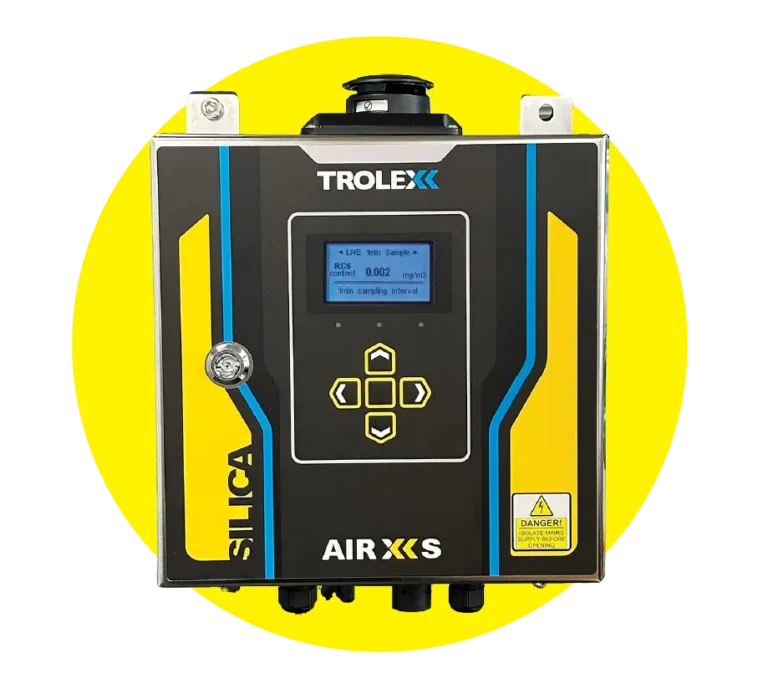
TX8005 AIR XD
Challenge
This company implemented real-time monitoring of hazardous dust across its milling processes. Based on strong understanding of the plant environment, most particulate matter was assumed to be RCS. The need for real-time monitoring was identified to monitor milling activity, identify process losses, and support corrective actions that reduce worker exposure and risk.
Outcome
Multiple real-time monitors were installed across five mill levels to monitor exposure and locate leaks. The system provided valuable insights, including one case enabling process improvements and another demonstrating benefits for occupational health. Real-time data helped identify issues quickly, supporting better control of emissions and improved workplace safety outcomes.
Company & Application
AIR XD was deployed on-site at a mineral processing site, where the company refines and packages crystalline silica sized between 1 μm and ~ 50 μm. This process can generate respirable crystalline silica (RCS) both as a biproduct of the milling process and as a finished product due the size of milled silica needed by their customers.
On-site, there are multiple vertical mills with increasingly fine silica produced at different levels of the mills. The need for real-time monitoring across various areas of the site, monitoring for different PM sizes and general dust soon became evident.
The Challenge
This company opted for real-time monitoring of hazardous dust across their milling processes. Due to a good understanding of the environment and processes at the plant, it was safe to assume that most of the particulate matter in the environment was RCS.
AIR XD was identified by this customer to enable them to monitor the milling process, in turn helping them identify losses from the process that can be corrected, reducing overall exposure for their workers.
The AIR XD plan
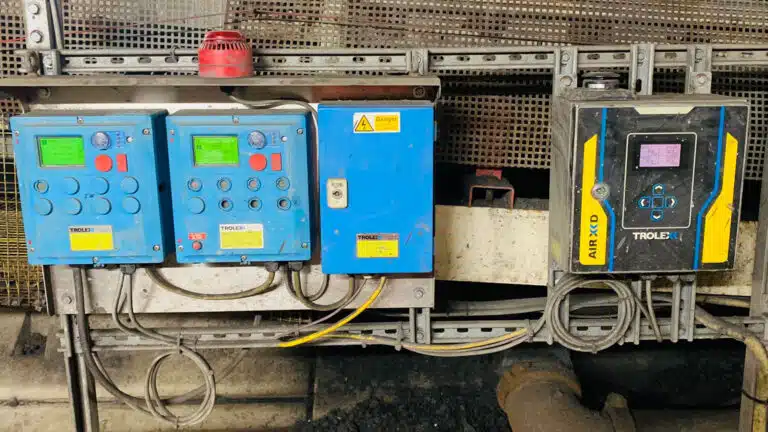
AIR XD units were placed alongside the mills on five levels to monitor exposure in different areas and to allow them to identify the location of any leaks. Examples given in this report highlight two areas where the customer was able to gather valuable data about their process using the AIR XD.
The first is an example of a process improvement/correction highlighted by the data provided by the AIR XD and the second shows the benefits to occupational health monitoring of real time data.
The AIR XD solution
The data collected by AIR XD was gathered alongside the silica milling process during a 24-hour period, with data for PM10, PM4.25, PM2.5 and PM1 collected. This data highlighted a sustained raised level of dust from midnight until 3am and then again from 2pm to 7pm, corresponding with when the mill was in the highest level of operation.
Throughout the whole process, AIR XD provided time stamped data with temporal resolution, highlighting that high particulate matter concentrations were
present in the air after the machinery was turned of at the end of a shift.
This was found to be due to the fact that the extraction system for the mill shut o before the mill had finished spinning down releasing a cloud of dust into the area. This was quickly resolved by altering the mill program so that the extraction stayed on for 15 minutes after the mill was shut down.
What it meant moving forward?
- Real-time monitoring determined dust levels spiked well above the legal level:
The important result is that a conventional monitoring sample gathered between 6am (the start of the shift) and 2pm would have detected exposure below the legal limit.
- 15-minute average shows sustained levels above the legal limit: Indication that much greater exposure occurred for anyone around the process at that time.