Hear from Adrian
We know that there’s probably hundreds of things which need constant monitoring and checking over during your working day, and the constant safety of your workforce is likely one of the top priorities. But we’re here to help.
Adrian Eccles, Technical Product Manager here at Trolex, explains the most beneficial ways to know if you’re adequately protecting your employees against hazardous dusts.

Getting an expert view
A great place to start is utilising the services of a registered occupational hygienist. Have air monitoring undertaken on the premises to get a baseline idea of your risk environment with regard to dust and then implement the recommendations of the hygienist to start reducing your levels of exposure.
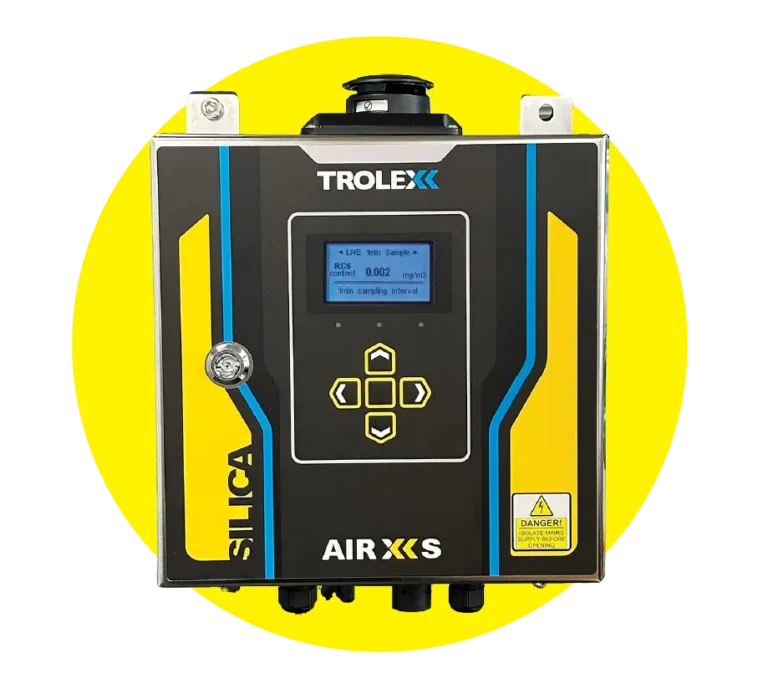
To support this approach and get the most from your investment in the hygienist, teams can use real-time dust monitoring technology to collect data about their workers’ exposure to risk.
Real-time monitoring will also notify them instantly if any alarm points are breached, which would indicate a failure in a control, or alert to a non-prescribed operating method being used by a worker.

Supporting recommendations with real-time data
Real-time monitoring effectively offers an extra layer of protection for the entire workplace. Rather than going into it blind, and depending on information from the hygienist, real-time monitoring supports all the work being done by the hygienist. Adrian also highlighted how personal real-time monitoring can be beneficial in a similar scenario:
“Personal real-time monitoring and the subsequent data has many benefits in the workplace. Not only should it be used in a multi-pronged approach to safety, but it can also be used as an educational and training tool. For example, by demonstrating best practices to workers, they can better understand how a subtle change in the way they complete a task can have a major impact on their exposure to risk from dust.
Real-time monitoring can highlight a worker who isn’t following the assigned procedure and is putting themselves and any others in the area at risk from dangerous levels of dust. And when information or alerts are displayed immediately on a screen, this adds real power to training efforts.”

A more personal approach
Adrian also highlighted how important personal real-time monitoring can be, when engaging workers with the benefits of real-time data. If workers can see, in real-time, the dust levels they’re directly exposed to, not only do they know their workplace is taking care of them, but it’s also much more valuable than just being told ‘you’re at risk of hazardous dust exposure’ without any significant information or data to back it up. Adrian said:
“Personal, real-time monitoring gives confidence to workers that they’re being protected and that their employer is taking their health seriously. An organisations’ staff are their biggest asset, and this technology helps ensure that they’re being kept safe from harmful dust levels.
By keeping your employees safer, you’re also helping to protect your organisation by reducing the likelihood of negligence claims or breaches of safety legislation (and the cost implications and negative publicity that often come along with it).”

Accessible data for aligning the workforce
And it’s not just worker satisfaction and compliance, which adequately protecting your workforce through real-time monitoring can provide, as Adrian demonstrates:
“This real-time technology has been proven to lower costs for the businesses who implement it: at a car manufacturing plant in Europe, for example, real-time dust monitoring technology revealed that extractors were running too fast.
When they lowered the speed of the extraction units, they lowered their energy usage and costs. And at a large construction project, real-time dust monitoring technology helped regulate water suppression efforts, resulting in lower water and diesel usage, and reduced costs.”
So, is your workplace being adequately protected against dust? If you’re not regularly monitoring the effectiveness of your dust control measures and utilising the expertise of hygiene professionals, then you’re putting yourself and your workers at risk of hazardous dust exposure.