


The scale of the dust problem in outdoor industrial environments

Outdoor industrial environments include industries such as construction and quarrying and are at high risk of excess hazardous dust exposure. This type of dust is referred to as construction dust. Construction dust is often a cause of serious ill health for many workers, causing diseases such as Chronic Obstructive Pulmonary Disease (COPD), Occupational Asthma and Silicosis. 

According to the UK’s Health and Safety Executive (HSE), the term construction dust “is a general term used to describe different dusts that you may find on a construction site” and is also produced through similar workplace processes. These different dusts include silica dust, created when working on materials such as concrete or stone, wood dust which is created when working on materials like softwood, hardwood, or wood-based products and ‘general dust’ created when working on materials like limestone or marble. 

The main issue relating to construction dust is often the failure to effectively eliminate or minimise workers’ exposure to it, in and surrounding any outdoor industrial environment, as well as the methods taken to do this. 

A broad range of workplace processes taking place in construction and quarrying essential to the job, like crushing, cutting, and grinding cause general dust to become airborne leading to exposure for workers. Similarly, when grinding into bricks, extraction of rock and similar processes using silica containing materials creates respirable crystalline silica (RCS) which, when inhaled, becomes incredibly harmful to the lungs.  

Often, the scale of the hazard depends on varying factors, including time, location, and methods of working. If people are working on tasks for longer, in a more enclosed space or are not using effective control methods for the dust, e.g. dry sweeping the dust, they are more likely to increase their risk of dust exposure.  

In many cases, it’s difficult to completely eliminate or substitute materials causing excess dust, due to the materials being used for the job. Therefore, workplaces may work in line with the Hierarchy of Controls to introduce engineering controls to isolate and limit workers from exposure to the hazard by altering the way the work. 

Construction dust is a major issue for multiple countries. Worldwide, there are over 200 million people employed in both construction and quarrying industries, meaning there’s a high risk of all outdoor industry workers being exposed to occupational lung diseases. For example, in the UK, it’s estimated that between 3,000 – 4,000 construction workers per year suffer from a work-related breathing or lung issues.  

Construction dust can affect different areas of an outdoor site. When completing processes such as grinding and cutting, dust may be closer to the breathing zone for individuals, heightening the chance of inhalation of hazardous particles. In contrast, processes like crushing and extraction may produce a larger amount of dust, making it airborne and spreading further affecting an entire site. 

Because these mentioned workplace processes take place outdoor, this finite dust can spread across entire sites and even further afield. The Environmental Protection Agency estimate that particle pollution generated in one area of a workplace can travel hundreds or thousands of miles. 

For all industry workers across an entire site, construction dust is a serious concern. Whilst workers directly involved in construction or quarrying processes are most at risk, any workers in nearby office cabins, the local communities or members of the public nearby can also be at risk, due to the nature of finite dust becoming airborne and spreading further afield.  

In 2019, Joanna McNeil was employed by an Australian quarrying and construction materials company, where her office was located in a portable cabin. Despite being located around 100 metres away from the quarry, Joanna developed silicosis due to exposure to hazardous silica dust at the age of just 36.

Almost anyone located on and nearby a construction or quarrying site can be severely affected by exposure to hazardous dust, whether directly involved in the workplace processes or simply by just being located nearby the worksite. 

PARTICULATE MONITORING

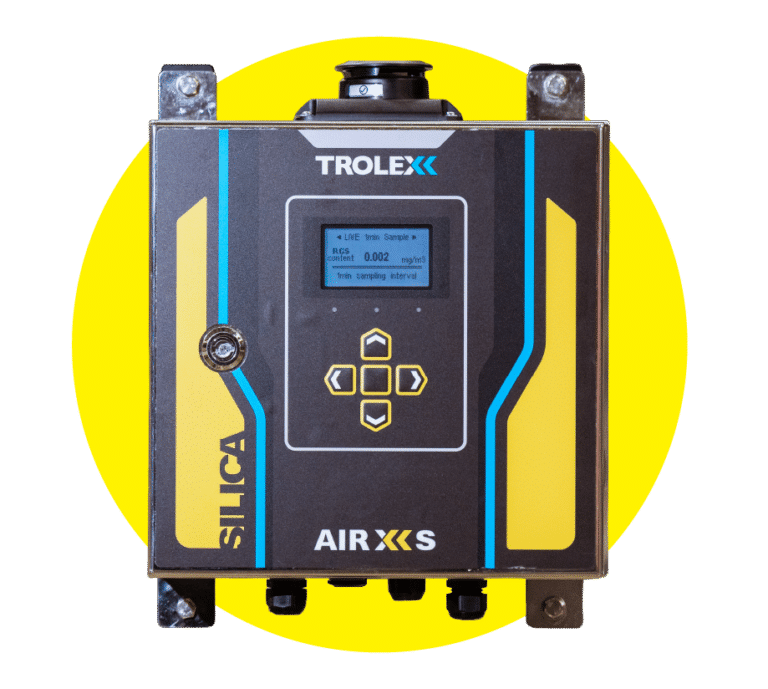
Image of TX8100 AIR XS Silica Monitor
TX8100 AIR XS Silica Monitor

Image of TX8061 XD1+ Personal Dust Monitor
TX8061 XD1+ Personal Dust Monitor

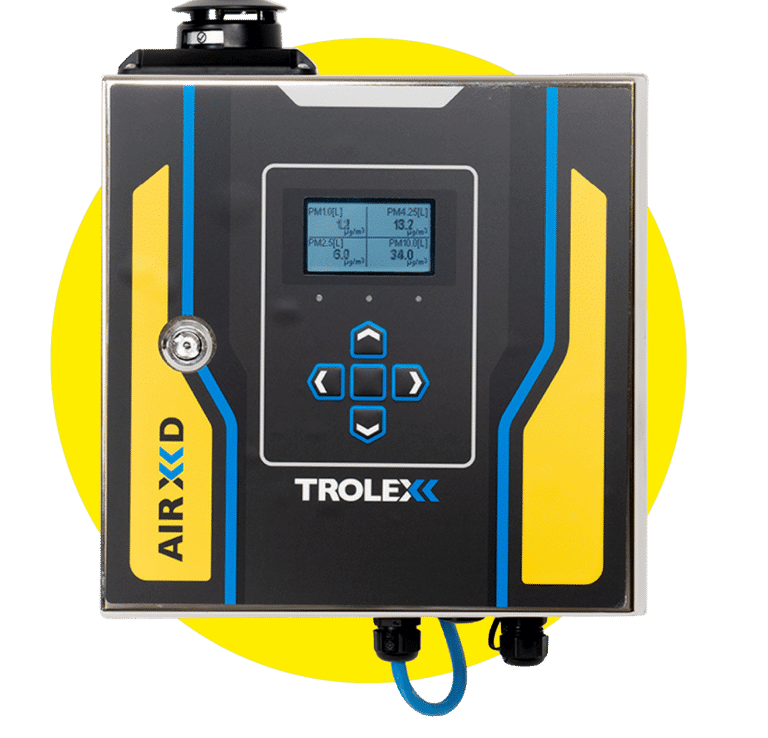
Image of TX8005 AIR XD Dust Monitor
TX8005 AIR XD Dust Monitor

Image of TX8060 XD ONE Portable Dust Monitor
TX8060 XD ONE Portable Dust Monitor

GET AIR X UPDATES

    You may unsubscribe from these communications at any time. For more information on how to unsubscribe, our privacy practices, and how we are committed to protecting and respecting your privacy, please review our Privacy Policy.

    The scale of the dust problem in underground industrial environments

    Underground industrial environments include workplaces such as mining and tunnelling are at high risk of excess hazardous dust exposure. One of the most common health issues in underground environments is respiratory diseases, such as silicosis, black lung disease and lung cancer, caused by exposure to hazardous dust such as silica or coal dust. 


    Silica dust is generated when rocks and sand are disturbed, which is very common in underground environments due to the nature of the heavy-duty processes. If inhaled, silica dust can cause silicosis, a serious long term lung disease which affects individuals breathing.  

    Coal dust is generated during any common mining activity and exposure to coal dust can put workers at risk of black lung disease, also known as Coal Workers Pneumoconiosis. As coal mining is one of the most common forms of mining worldwide, the risk of black lung disease for all coal workers is high.  

    Other types of dust which cause serious harm to health underground are generally referred to as ‘mine dust’. As with silica and coal dust, mine dust generated in underground applications can put those exposed at serious risk of lung diseases and respiratory problems. 

    All types of lung diseases caused by dust in underground environments are linked to various occupational processes necessary to the job. In mining, common processes such as extraction and crushing causes natural minerals, rocks and stone to be disturbed causing dust such as silica to become airborne. In tunnelling, common processes such as drilling and blasting also disturb and break down sediments to create hazardous dust in the environment. 

    As with most heavy-duty industries, dust is a by-product of the working processes, so the risks, management and control of the dust is predetermined. However, in underground environments, due to the lack of good air quality and limited atmosphere it is hard to fully control excess dust and ensure that risk management is followed to the highest level. Once dust becomes airborne, ventilation is limited, and dust becomes easily inhaled by anyone in the vicinity. 

    Dust in underground applications tends to affect the immediate locations more than above ground, due to the nature of the confined space which the dust is generated in. The two most common underground industrial environments are mining and tunnelling, which are major sources of revenue for countries worldwide. 

    According to various sources, there are over 2,300 active underground mines across the world, notably which are located in both North and South America and Australia. Most of these mines are used for the mining of hard-rock minerals, like gold, silver and iron, as well as soft-rock minerals, like coal. This highlights why exposure to silica and coal is so common during underground mining processes. 

    Some of the largest underground tunnelling projects have taken place across the entirety of Europe as well as in South-East Asia in countries such as Japan and Malaysia. These projects were completed for new railroads, sewer systems and tunnels for driving, in order to improve and simplify life for local communities. Underground processes can occur anywhere worldwide, meaning that underground dust exposure underground is a threat for workers across the world. 

    Most commonly, those who work underground are at highest risk of exposure to hazardous dust. As mentioned, due to the nature of the confined working space and limited atmosphere, hazardous dust can become increasingly easy to inhale for workers increasing the risk of lung diseases. 

    In April 2024, the US’ Mine Safety and Health Administration (MSHA) introduce the new silica ruling which will aim to lower miners’ exposure to RCS and improve respiratory protection for all airborne hazards. The ruling firmly puts the emphasis on all miners’ health in underground industrial environments and focuses on improving the working environment to ensure that workers remain safe and healthy when working. 

    The ruling also lowers the permissible exposure limit (PEL) for respirable crystalline silica to 50 µg/m3 for a full shift, calculated as an 8-hour time-weighted average (TWA) for all miners and establishes an action level for respirable crystalline silica at 25 µg/m3 for a full shift, calculated as an 8-hour TWA for all miners. The focus from MSHA is to protect all miners in the US from hazardous silica dust in underground applications. 

    PARTICULATE MONITORING

    Image of TX8100 AIR XS Silica Monitor
    TX8100 AIR XS Silica Monitor

    Image of TX8061 XD1+ Personal Dust Monitor
    TX8061 XD1+ Personal Dust Monitor

    Image of TX8005 AIR XD Dust Monitor
    TX8005 AIR XD Dust Monitor

    Image of TX8060 XD ONE Portable Dust Monitor
    TX8060 XD ONE Portable Dust Monitor

    GET AIR X UPDATES

      You may unsubscribe from these communications at any time. For more information on how to unsubscribe, our privacy practices, and how we are committed to protecting and respecting your privacy, please review our Privacy Policy.

      5 quarrying scenarios where respirable dust is generated

      Crushing + screening

      Breaking down all types and sizes of rocks in quarrying, through crushing and screening processes generate high levels of respirable dust. When the rocks are crushed and then screened, large volumes of both visible and invisible dust becomes airborne and travels across the entire quarry site, presenting a risk for all workers. 

      Drilling + blasting

      As in mining, quarrying also involves a large amount of drilling, blasting and other methods to break down rocks and spaces for processing and extracting. These processes lead to rocks, clay and other natural materials becoming very small and making them airborne and easily inhaled, leading to severe health risks for workers. 

      Storage of minerals + natural materials

      Once all materials have been extracted and processedthey’re stored in designated areas after collection. Herenatural materials are stored in stockpiles, where they grind against other materials and minerals, creating more and more respirable dust. When these minerals are used, the settled dust becomes disturbed and airborne. 

      Maintenance + handling processes

      Maintenance of all types of machinery, vehicles and minerals, such as rock and sand in quarrying can generate respirable dust. If dust from screening, drilling and even in stockpiles isn’t correctly maintained it becomes dormant. Poor maintenance and handling processes like dry sweeping can spread dust, presenting health issues. 

      Transport of goods

      Heavy-duty vehicles used in quarrying such as haul trucks and conveyors often involve moving large volumes of natural minerals which have been processed and are fine and small in size. This can present risk of airborne dust across all areas of the site, as well as other dust which may be trapped in wheels and cabs of the vehicle. 

      PARTICULATE MONITORING

      Image of TX8100 AIR XS Silica Monitor
      TX8100 AIR XS Silica Monitor

      Image of TX8061 XD1+ Personal Dust Monitor
      TX8061 XD1+ Personal Dust Monitor

      Image of TX8005 AIR XD Dust Monitor
      TX8005 AIR XD Dust Monitor

      Image of TX8060 XD ONE Portable Dust Monitor
      TX8060 XD ONE Portable Dust Monitor

      GET AIR X UPDATES

        You may unsubscribe from these communications at any time. For more information on how to unsubscribe, our privacy practices, and how we are committed to protecting and respecting your privacy, please review our Privacy Policy.

        The scale of the dust problem in indoor environments

        Indoor industrial environments are working conditions that can be more harsh than regular working environments, such as offices. These environments can vary from different types of manufacturing and textile processes to stone works and woodworking. 

        Indoor industrial environments pose a variety of health and safety threats to workers. Due to the nature of the heavy-duty processes and materials used, exposure to hazardous dust is one of the most common threats to workers health. This can be any type of dust, from silica dust processed from stone, or wood dust, cotton dust and even combustible dust. 

        All these types of dust pose a threat to workers, not only because they can seriously damage workers health in various ways, but also because they are difficult to manage in an occupational environment, with each dust possessing different qualities dangerous to worker health. 

        Manufacturing and indoor craftsmanship, involving products such as stone, wood, textile – and even food – can produce high levels of excess dust due to the machinery, products and materials used. Each industry is at risk of different types of dust. 

        Stone has a high silica content, and when drilled or cut into, can generate fine respirable crystalline silica (RCS) content – or silica dust. which, if exposed to, can cause lung diseases such as silicosis and lung cancer. Similarly, processes such as cutting and sawing in woodworking can generate both hardwood and softwood dust, which can lead to various lung diseases such as asthma and Chronic Obstructive Pulmonary Diseases (COPD). 

        In textile processes such as mixing fibres (blending), separating fibres (carding) and reducing loose materials (drawing) creates excess cotton and wool dust. These dusts have been known to cause byssinosis, an occupational asthma and respiratory irritation. Cotton and wool dust is also known to poses a threat when it becomes explosive or combustible. Similarly, in food manufacturing, substances such as flour, sugar and dried milk are all explosible dusts. During processes such as milling, sugar grinding or spray drying of milk, these materials become much finer, making them combustible and at risk of explosion if the concentration of dust in the air is within the explosion limits or a source of ignition is present.  

        Any indoor industrial environments, which depend on heavy-duty processes are at risk of exposure to hazardous dust. Unlike outdoor industrial environments, when dust is generated indoors, it is limited to an enclosed and somewhat confident space, with limited fresh air flow. The use of Local Exhaust Ventilation (LEV) is essential to ensure excess dust is well controlled in the workplace. 

        However, according to the Health and Safety Executive (HSE), many employers buy LEV to protect workers’ health but find that it doesn’t work, because it may be the wrong type or because it may not be properly installed or maintained. There are multiple things to check when both installing and using LEV, like checking it’s working correctly for each individual job, to make sure it’s still working correctly if it’s been moved and that the indicators on the LEV are working as expected. This increases the risk of exposure to hazardous dust for workers in indoor industrial environments. 

        Workers in indoor industrial environments are at risk of hazardous dust exposure. Whether working with high silica content materials, hardwood / softwood, or textiles, the processes undertaken are almost guaranteed to produce excess dust which has the potential to be hazardous and harmful to workers health. 

        Gordon Sommerville worked as a stonemason for large parts of his career and was regularly exposed to large clouds of dust, including silica dust, on a daily basis, with limited personal protective equipment (PPE) or suitable ventilation to protect him. “At the moment in fabrication and workshop type premises, LEV is the recommended gold standard, but it’s far from fool proof.” Gordon said, when asked about how silica dust is regularly managed in enclosed spaces. 

        Gordon continued “Many workers, myself included, who previously worked in enclosed sheds are now either sick or dead. I would suggest that any enclosed area where dust is created should be monitored and recorded by law.” 

        Without suitable ventilation, PPE or methods to control hazardous dust suitably in indoor industrial environments, which are enclosed and confined in space, workers will be exposed to hazardous dust and subsequently lung diseases in their workplace. 


        PARTICULATE MONITORING

        Image of TX8100 AIR XS Silica Monitor
        TX8100 AIR XS Silica Monitor

        Image of TX8061 XD1+ Personal Dust Monitor
        TX8061 XD1+ Personal Dust Monitor

        Image of TX8005 AIR XD Dust Monitor
        TX8005 AIR XD Dust Monitor

        Image of TX8060 XD ONE Portable Dust Monitor
        TX8060 XD ONE Portable Dust Monitor

        GET AIR X UPDATES

          You may unsubscribe from these communications at any time. For more information on how to unsubscribe, our privacy practices, and how we are committed to protecting and respecting your privacy, please review our Privacy Policy.

          5 health risks linked to occupational dust exposure

          1. Occupational lung diseases

          Arguably the most well-known and common risk associated with exposure to hazardous dusts in the workplace relate to occupational lung diseases. Diseases such as Silicosis, Chronic Obstructive Pulmonary Disease (COPD), Black Lung Disease and occupational lung cancer all are associated with dust inhalation in the workplace. 

          2. Respiratory illness and irritation

          Whilst long-term exposure to breathing in dust can lead to lung diseases, initial, short-term exposure to hazardous dusts can lead to respiratory illness and irritation. Breathing in dust such as Respirable Crystalline Silica (RCS) and wood dust can cause serious respiratory diseases; the NHS claim it’s the third biggest cause of death in England. 

          3. Cardiovascular diseases

          Exposure to breathing in hazardous dust can lead to cardiovascular diseases and other heart and blood vessel issues. Dust and hazardous particulates can easily travel through your bloodstream and deep into your lungs, damaging your blood vessels in the process. This can increase blood pressure and make it more likely to give you blood clots. 

          4. Occupational asthma

          The British Thoracic Society reports that occupational asthma is responsible forroughly 1/6 cases of adult-onset asthma. Occupational asthma can be caused by various types of dust in multiple different industries, such as flour dust, wood dust, grain dust and various fumes from metals.  

          5. Long-term health concerns

          There have been examples of various other health concerns relating to workplace exposure to hazardous dust. Skin, eye and nose irritation, as well as some rare examples of kidney disease have all been linked to examples where workers have failed to protect themselves against hazardous dust. 
          PARTICULATE MONITORING

          Image of TX8100 AIR XS Silica Monitor
          TX8100 AIR XS Silica Monitor

          Image of TX8061 XD1+ Personal Dust Monitor
          TX8061 XD1+ Personal Dust Monitor

          Image of TX8005 AIR XD Dust Monitor
          TX8005 AIR XD Dust Monitor

          Image of TX8060 XD ONE Portable Dust Monitor
          TX8060 XD ONE Portable Dust Monitor

          GET AIR X UPDATES

            You may unsubscribe from these communications at any time. For more information on how to unsubscribe, our privacy practices, and how we are committed to protecting and respecting your privacy, please review our Privacy Policy.