The scale of the dust problem in underground industrial environments

Underground industrial environments include workplaces such as mining and tunnelling are at high risk of excess hazardous dust exposure. One of the most common health issues in underground environments is respiratory diseases, such as silicosis, black lung disease and lung cancer, caused by exposure to hazardous dust such as silica or coal dust. 


Silica dust is generated when rocks and sand are disturbed, which is very common in underground environments due to the nature of the heavy-duty processes. If inhaled, silica dust can cause silicosis, a serious long term lung disease which affects individuals breathing.  

Coal dust is generated during any common mining activity and exposure to coal dust can put workers at risk of black lung disease, also known as Coal Workers Pneumoconiosis. As coal mining is one of the most common forms of mining worldwide, the risk of black lung disease for all coal workers is high.  

Other types of dust which cause serious harm to health underground are generally referred to as ‘mine dust’. As with silica and coal dust, mine dust generated in underground applications can put those exposed at serious risk of lung diseases and respiratory problems. 

All types of lung diseases caused by dust in underground environments are linked to various occupational processes necessary to the job. In mining, common processes such as extraction and crushing causes natural minerals, rocks and stone to be disturbed causing dust such as silica to become airborne. In tunnelling, common processes such as drilling and blasting also disturb and break down sediments to create hazardous dust in the environment. 

As with most heavy-duty industries, dust is a by-product of the working processes, so the risks, management and control of the dust is predetermined. However, in underground environments, due to the lack of good air quality and limited atmosphere it is hard to fully control excess dust and ensure that risk management is followed to the highest level. Once dust becomes airborne, ventilation is limited, and dust becomes easily inhaled by anyone in the vicinity. 

Dust in underground applications tends to affect the immediate locations more than above ground, due to the nature of the confined space which the dust is generated in. The two most common underground industrial environments are mining and tunnelling, which are major sources of revenue for countries worldwide. 

According to various sources, there are over 2,300 active underground mines across the world, notably which are located in both North and South America and Australia. Most of these mines are used for the mining of hard-rock minerals, like gold, silver and iron, as well as soft-rock minerals, like coal. This highlights why exposure to silica and coal is so common during underground mining processes. 

Some of the largest underground tunnelling projects have taken place across the entirety of Europe as well as in South-East Asia in countries such as Japan and Malaysia. These projects were completed for new railroads, sewer systems and tunnels for driving, in order to improve and simplify life for local communities. Underground processes can occur anywhere worldwide, meaning that underground dust exposure underground is a threat for workers across the world. 

Most commonly, those who work underground are at highest risk of exposure to hazardous dust. As mentioned, due to the nature of the confined working space and limited atmosphere, hazardous dust can become increasingly easy to inhale for workers increasing the risk of lung diseases. 

In April 2024, the US’ Mine Safety and Health Administration (MSHA) introduce the new silica ruling which will aim to lower miners’ exposure to RCS and improve respiratory protection for all airborne hazards. The ruling firmly puts the emphasis on all miners’ health in underground industrial environments and focuses on improving the working environment to ensure that workers remain safe and healthy when working. 

The ruling also lowers the permissible exposure limit (PEL) for respirable crystalline silica to 50 µg/m3 for a full shift, calculated as an 8-hour time-weighted average (TWA) for all miners and establishes an action level for respirable crystalline silica at 25 µg/m3 for a full shift, calculated as an 8-hour TWA for all miners. The focus from MSHA is to protect all miners in the US from hazardous silica dust in underground applications. 

PARTICULATE MONITORING

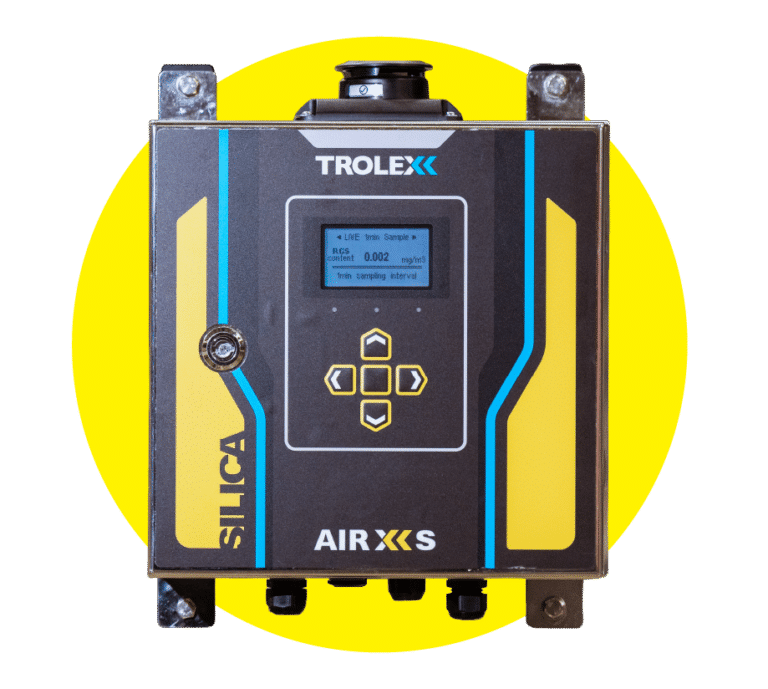
Image of TX8100 AIR XS Silica Monitor
TX8100 AIR XS Silica Monitor

Image of TX8061 XD1+ Personal Dust Monitor
TX8061 XD1+ Personal Dust Monitor

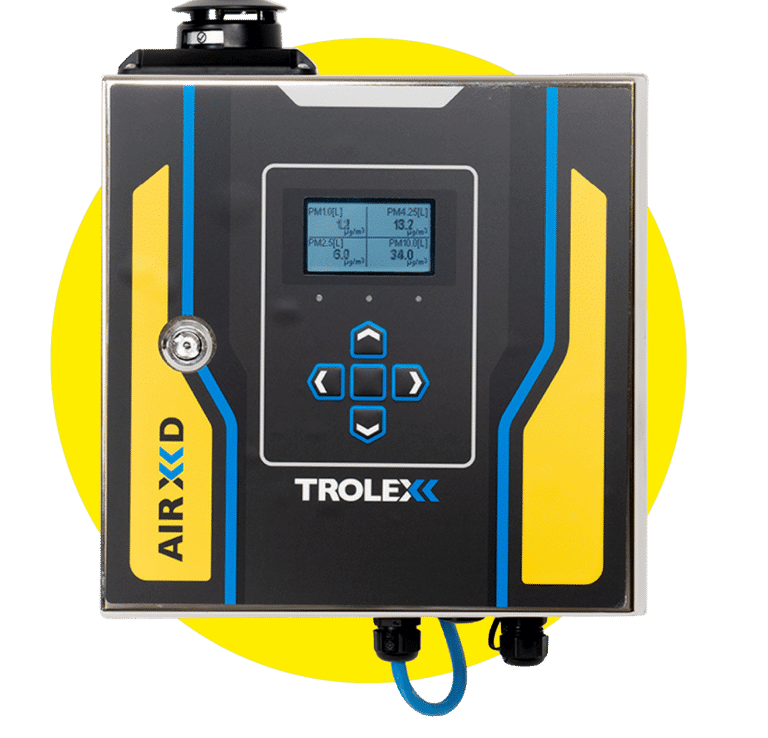
Image of TX8005 AIR XD Dust Monitor
TX8005 AIR XD Dust Monitor

Image of TX8060 XD ONE Portable Dust Monitor
TX8060 XD ONE Portable Dust Monitor

GET AIR X UPDATES

    You may unsubscribe from these communications at any time. For more information on how to unsubscribe, our privacy practices, and how we are committed to protecting and respecting your privacy, please review our Privacy Policy.