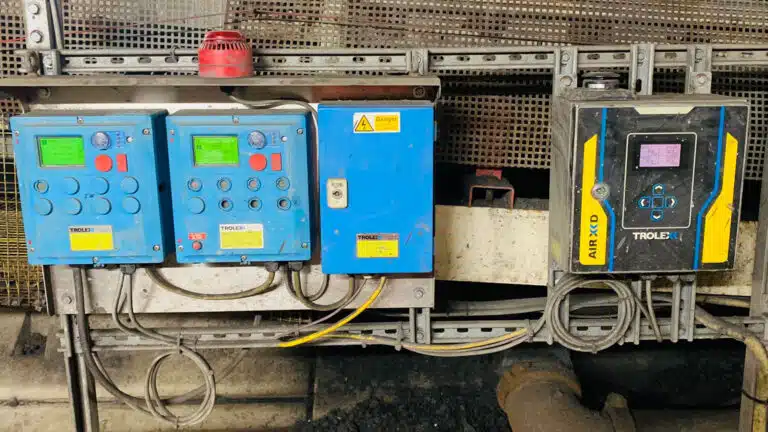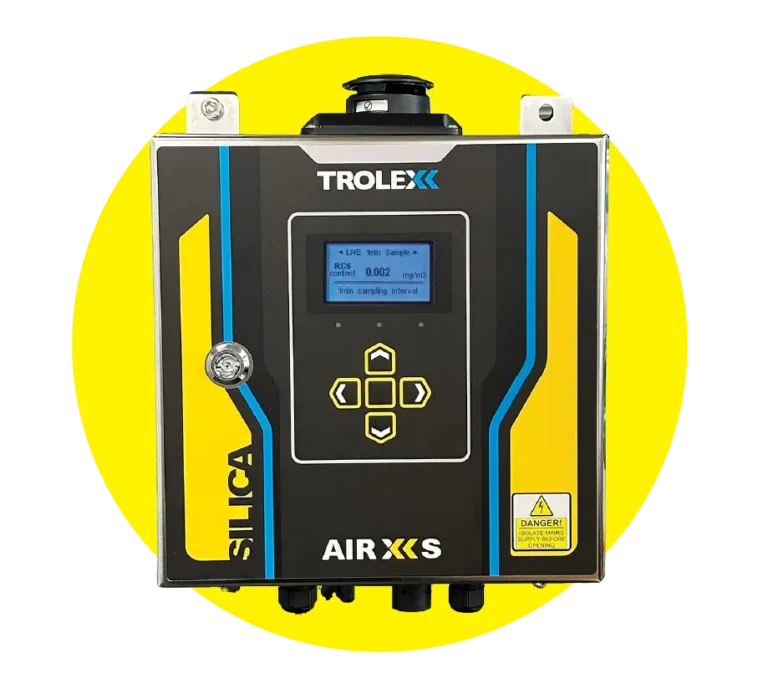




Personal sampling was conducted on one of the Mill Operators as they filled bags with materials containing crystalline silica. 2 AIR XS units were positioned either side of the Operator’s work area, and the resultant respirable crystalline silica (RCS) levels were recorded in real time.
In line with standard Occupational Hygiene practice, the personal samplers were retrieved from the Operative, processed, and submitted to an external accredited laboratory for analysis of both respirable dust and RCS exposure concentrations.
The analytical results indicated that the Operative was exposed to 0.101 mg/m³ of RCS during bagging activities. At the same time, the AIR XS units returned average RCS results of 0.118 mg/m³ and 0.079 mg/m³ respectively. The data provided valuable insights into the operative’s behaviours based on exposure profiles during the assessment period.
On the results, the client commented:
“We were exploring ways to improve our understanding of airborne exposure in real time, and the AIR X trial offered exactly that. Compared to traditional monitoring, which gave us just a single data point, the real-time exposure profile illuminated work patterns and pinpointed specific sources of particulates throughout the shift. It provided a level of insight we hadn’t seen before and opened the door to more informed decision-making.”

This comparative result not only demonstrates how AIR XS performs in line with traditional monitoring techniques, but also highlights its importance in interpreting operative behaviours, the impact of resting periods, and the design of control measures.




Arguably the most well-known and common risk associated with exposure to hazardous dusts in the workplace relate to occupational lung diseases. Diseases such as Silicosis, Chronic Obstructive Pulmonary Disease (COPD), Black Lung Disease and occupational lung cancer all are associated with dust inhalation in the workplace.
Whilst long-term exposure to breathing in dust can lead to lung diseases, initial, short-term exposure to hazardous dusts can lead to respiratory illness and irritation. Breathing in dust such as Respirable Crystalline Silica (RCS) and wood dust can cause serious respiratory diseases; the NHS claim it’s the third biggest cause of death in England.
Exposure to breathing in hazardous dust can lead to cardiovascular diseases and other heart and blood vessel issues. Dust and hazardous particulates can easily travel through your bloodstream and deep into your lungs, damaging your blood vessels in the process. This can increase blood pressure and make it more likely to give you blood clots.
The British Thoracic Society reports that occupational asthma is responsible for roughly 1/6 cases of adult-onset asthma. Occupational asthma can be caused by various types of dust in multiple different industries, such as flour dust, wood dust, grain dust and various fumes from metals.
There have been examples of various other health concerns relating to workplace exposure to hazardous dust. Skin, eye and nose irritation, as well as some rare examples of kidney disease have all been linked to examples where workers have failed to protect themselves against hazardous dust.
OVERVIEW
Application
Industry
Country
Product(s) used
Challenge
In pigment manufacturing, health monitoring is typically done via periodic personal sampling, where workers wear pumps and filters for an 8-hour shift. Lab analysis measures total dust and elements like cadmium, ensuring compliance with exposure limits. However, it cannot identify exposure sources, limiting process improvements and delaying detection of production leaks.
Outcome
AIR XD was deployed on a mobile tripod to monitor airborne dust and detect process leaks across the plant. It identified elevated particulate levels from pigment manufacturing, which were effectively removed by extraction systems. This confirmed proper control performance and helped highlight key sources contributing to airborne particulate for review.
The pigment industry faces challenges of maintaining product yield whilst also maintaining high standards in workplace safety. Many of the substances used in the pigment industry are subject to low workplace exposure limits (WEL) making reliable and repeatable control of the manufacturing process somewhat difficult.
Profitability of the business is also dependent on optimisation of process efficiency. Whilst Cadmium pigment is one of the most controlled products under REACH legislation, the current a long-term exposure limit is just 25 µg/m3 as an eight-hour time weighted average (TWA), higher than other TWA’s of similar products.
For many companies, occupational health monitoring takes the form of personal monitoring carried out every 6 or 12 months. Workers wear a personal device containing a pump connected to a filter to collect the particulate matter they would be exposed to during a typical 8-hour shift.
This is then taken to a lab to analyse the total dust exposure along with composition analysis which is generally performed to give indications of exposure to individual elements such as cadmium. This is a good way of ensuring the exposure does not exceed current limits but cannot give information about the source of the exposure.
The lack of information prevents the problem from being fixed in the future and doesn’t allow process improvement. One of the controls used to limit worker exposure at many sites is to limit the amount of time workers spend in the production environment, using remote process control but means process leaks aren’t noticed in an efficient manner.
Cadmium pigment manufacture involves several process steps whereby the constituent chemicals are mixed, converted to a precipitate, filtered and the resulting press cake calcined at high temperature to produce a stable pigment powder. This powder is then milled and packaged by weight for sale to manufacturers of plastics, glass, etc.
AIR XD was used in a mobile configuration mounted on a tripod, enabling AIR XD to be moved around the production plant to monitor the active process. The aim of the deployment was to monitor the levels of airborne dust as well as monitoring for process leaks and variation.
AIR XD picked up that the pigment manufacturing process led to raised levels of airborne particulate, but these were quickly cleared by the extraction system in the room.
This is typical of a process and extraction system that are working correctly to limit potential worker exposure. This information can be used to identify the biggest contributors to airborne particulate from the process allowing these to be reviewed.
AIR XD can be used to quickly identify any deviation from normal operation in real time. A large amount of dust was released into the air which could not be quickly removed by the extraction system. The AIR XD alarm was triggered, notifying the process controller so that the system could be shut down minimising the amount of product lost.
The 5-minute average was used for the alarm trigger to prevent the alarm from being triggered by instantaneous spikes generated when products are added to the process. Only sustained raised levels of airborne particulate triggered the alarm.
OVERVIEW
Customer / End User
Application
Industry
Country
Product(s) used
Challenge
The automated milling and drying process spans four mills across two buildings, with minimal manual input. To protect workers from harmful dust, exposure is limited by reducing time in production areas. However, this delays detection of leaks, leading to significant material loss and increased costs before issues are identified.
Outcome
AIR XD units targeted PM4.25 silica dust with adjusted density settings. Alarm thresholds were refined to reflect process conditions. Real-time data revealed dust spikes after shutdown, caused by extraction stopping too early. Extending extraction by 15 minutes reduced emissions, improved efficiency, and enabled further process optimisations, cutting losses and operational costs.
A specialist in developing, manufacturing, and marketing performance additives for the use in the construction, electronics, consumer products, agriculture, automotive, oil & gas industries worldwide. Throughout their processes, raw material is fed into a milling machine along with additives needed to make the required final product.
They’re mixed and milled to the required particle size. Filters ensure that only the required sizes pass through to the rotary dryer where all moisture is removed before the product is moved to the final hopper. From there the product is either bagged by weight or transferred directly to trucks for transport.
The milling and drying process is fully automated with manual interaction only required at the raw material loading and packing/loading stages. Production at the site consisted of four vertical mills spread over two different buildings.
The drive to protect employees from potentially harmful dust is a priority for the company. They have identified prevention of exposure as the best form of protection and there’s a drive to reduce the amount of time that personnel spend inside the production facility.
This ensures worker safety but generates its own problems, as process leakages aren’t detected until someone enters the production area and observes them. Due to the drive to limit exposure, this can lead to the loss of tons of product or raw material before the problem is found. This loss of yield comes at a significant cost to the business.
In order to ensure that leaks were detected at different stages of the milling process, 14 AIR XD units were installed in different positions around the plant. The aim was to allow the company to more easily identify the location any leaks that were detected.
Units were placed on different levels to monitor different parts of the process including the milling, drying and packing/loading areas and in order to meet the remote monitoring requirements of this company, the signal and alarm outputs from
the AIR XD units were connected to a control panel located in the central control room.
The AIR XD units were configured to focus on particles in the PM4.25 range, to specifically target dust generated from the processes, as opposed to all dust in the air. Since the majority of dust generated by the process was known to be silica, the particle density used in the airborne particulate density calculations were changed reflect this.
After a short trial, alarm levels were selected which reflected higher than normal dust for the process. These alarms were later adjusted on some of the units to reflect higher dust levels typical of those areas. The ability to correlate the real-time AIR XD to the milling process showed its benefit to the customer within a few weeks of installation.
AIR XD provided time stamped data with high temporal resolution, showing that high dust levels were present after machinery was switched off. This was found to be due
to the fact that the extraction system for the mill shut off before the mill had finished spinning down releasing a cloud of dust into the area.
This was quickly resolved by altering the mill program so that the extraction stayed on for 15 minutes after the mill was shut down. This small change to the process significantly reduced losses from the process and subsequent discoveries were also enabled further process improvements to be made for efficiency and cost savings.