

AIR XS DEPLOYED IN RAIL REPLACEMENT
OVERVIEW
Customer / End User
Central Rail Systems Alliance (CRSA)
Application
Rail Infrastructure
Industry
Construction & Infrastructure
Country
UK
Product(s) used
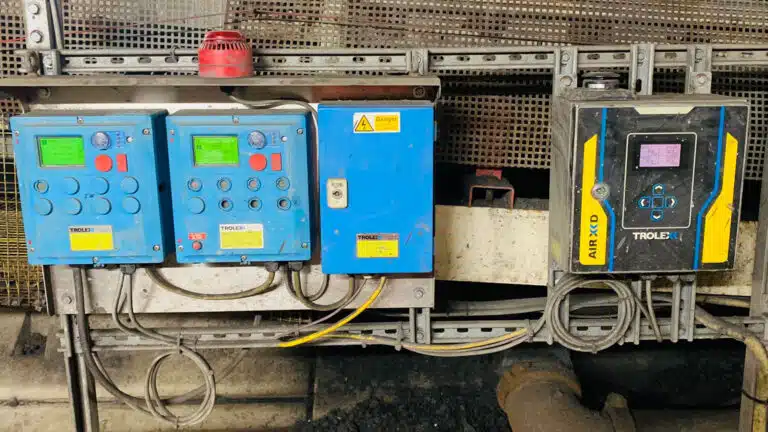
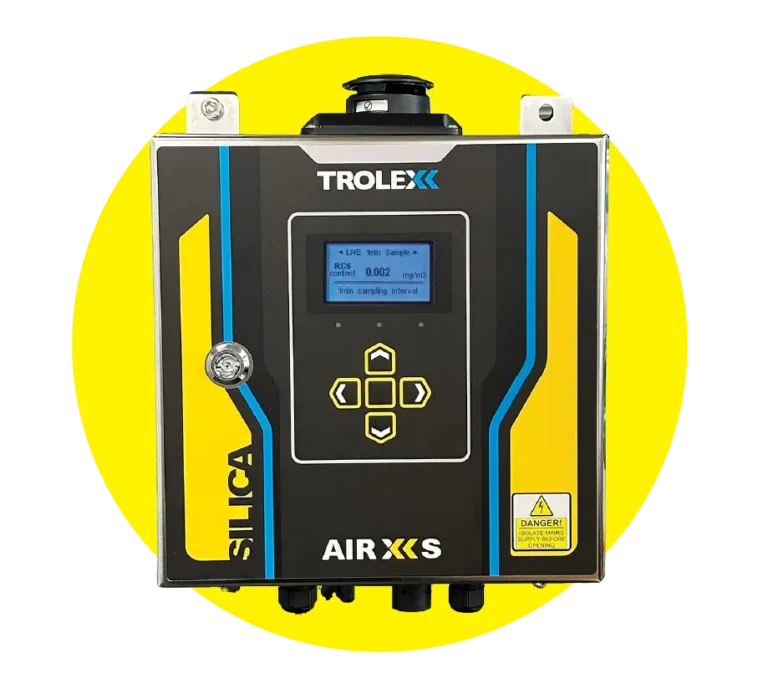
X8100 AIR XS
Challenge
The challenge was to measure the level of RCS and accompanying dust being released during rail infrastructure into the atmosphere during the unearthing process of 425 metres of rail and ascertain the level of risk associated for those working in the immediate and surrounding environments.
Outcome
Over the course of the 12-hour recording period, the AIR XS measured and reported high levels of silica being released, helping the CRSA to make give their workers the safest and most health-conscious decisions and other preventative measures are concerned in order to protect their workforce and create a blueprint for a safer working environment moving forward.
Company & Application
This case study is a detailed exploration and analysis of a trial ran to monitor respirable crystalline silica (RCS) levels, using an AIR XS Silica Monitor, ran on behalf of our UK partners Sunbelt Rentals.
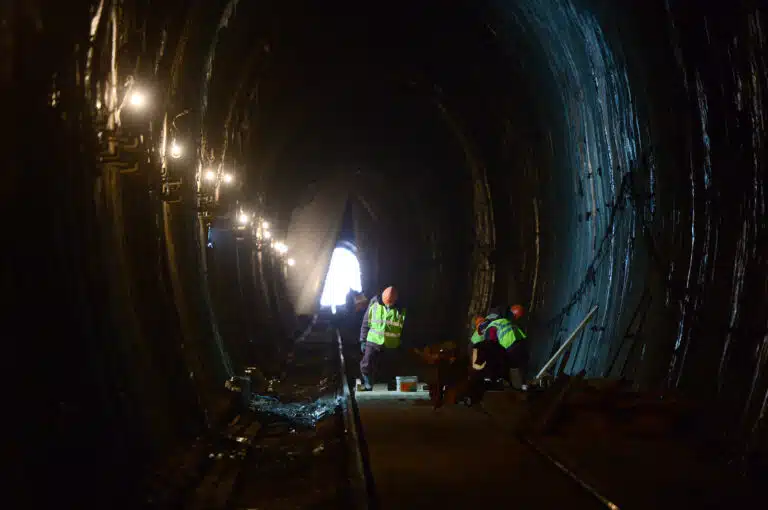
The trial monitored the real-time safety of activity being undertaken by The Central Rail Systems Alliance (CRSA) when replacing damaged track and the accompanying ballast as necessary, for a 12-hour long period, between 25th – 27th March 2023. This case study highlights the key findings of the trial ran by Sunbelt Rentals during this period.
When rail track is damaged or needs replacing, the ballast surrounding the track is distributed which can release silica – a harmful substance to humans if inhaled. Using the world’s first silica monitor, this project helped provide CRSA with live reporting to assess the real-time safety of their activities.
The Challenge
CRSA routinely check their network of track weaknesses, replacing damaged track and accompanying ballast as necessary. During the process individuals working in the area are required to wear appropriate RPE to protect themselves against inhaling harmful substances, particles or contaminants in the air.
Given the extensive unearthing taking place when replacing track, high levels of RCS can be released, exposing workers in the area to potentially harmful particles.
The challenge was to measure the level of RCS and accompanying dust being released into the atmosphere during the unearthing process of 425 metres of rail and ascertain the level of risk associated for those working in the immediate and surrounding environments.
CRSA took a proactive approach to uncovering the levels of RCS involved in such a process, to protect the health of their individuals and raise awareness for others in the market to create a blueprint for a safer working environment moving forward.
Considering the eventual recording of RCS levels, it would then be necessary to contextualise the risks of RCS exposure so the CRSA could determine whether further implementations should be invoked to protect the individual health of workers.
The AIR XS Plan
To uncover the live exposure levels during the replacement process, the world first real-time RCS monitor – the AIR XS – was chosen to record levels over a period of 12 hours between the 25 – 27 March 2023.
First the AIR XS recorded the levels of dust emitted during the unearthing process, which is valuable data on its own, but the RCS levels were also monitored in real-time and reported back in a live data set so work could be halted if recorded silica levels reached dangerous heights.
In order to make sure accurate levels were recorded, the AIR XS’ portability was leaned upon so it could be manoeuvred around the site in-line with project progress, so that working scenarios can be accurately represented in the data set.
Using light refraction properties unique to silica, AIR XS detects every particle flowing through it during the works, and then analyses its size, shape and refractive qualities to provide a live on-screen value of airborne silica.
Key features of the AIR XS include:
- On-device display of RCS measurement in mg/m³ or total particles counted per litre of air sampled. Rolling averaging periods are based on 15-minute, 1, 4, 8, and 12-hour patterns.
- On device warnings and alarms based on custom trigger thresholds.
- Data logging for download and post analysis using BreatheXS software.
The AIR XS Solution
Over the course of the 12-hour recording period, the AIR XS measured and reported high levels of silica being released, with the exposure level reaching up to 0.75 mg/m³ for a short peak period, seven times the 0.1 mg/m³ recommended levels as outlined by the HSE.
Despite this, these peak levels were not active for long periods of time, instead the average exposure level for the site activity was at 0.4 mg/m³, but this still sits significantly higher than the recommended levels for human exposure.
During the exposure testing, a subsequent AIR XS was placed in the surrounding areas to the site activity which still recorded a peak of 0.45 mg/m³ of dust exposure, and an average of 0.2 mg/m³.
Meaning those who are nearby, without a perceived risk of needing RPE before now, would’ve likely have still been exposed to higher than recommended levels. In analysing the data recorded by the AIR XS over the 12-hour period it became clear that there is a significantly higher level of silica released when unearthing railway track.
As well as this, the accompanying ballast, exposed both workers and surrounding people to potentially harmful levels of silica, particularly at peak levels of activity but also with lower levels of activity as well.
Considering that only dust exposure has been monitored during such activities in the past and silica has not been included in trials, this has given the CRSA a clear breakdown of their worker exposure levels.
It has helped the CRSA to make give their workers the safest and most health-conscious decisions and other preventative measures are concerned in order to protect their workforce and create a blueprint for a safer working environment moving forward.
“The team at Sunbelt Rentals were really informative from start to finish and took the time to fully demonstrate the unit’s capabilities and understand what works were going to be taking place.
We have completed trials prior, however this is the only unit where it is measuring silica and not just general dust levels.
We gained the knowledge that the exposure levels were actually higher than we anticipated with even low-level ballast disturbance. This has been a fundamental aid in helping us understand what levels of silica emissions are present.”