Company & Application
Balfour Beatty has hangers based in Bottesford, Leicestershire. The Bottesford maintenance hangars are used daily to store and maintain groundwork equipment, such as core drills, an environment at risk of excess dust exposure.
This equipment often returns from hire covered in various aggregate compounds, such as concrete, and needs to go through a rigorous cleaning process where much of the aggregate material is broken off before the equipment is thoroughly washed and cleaned.
The Challenge
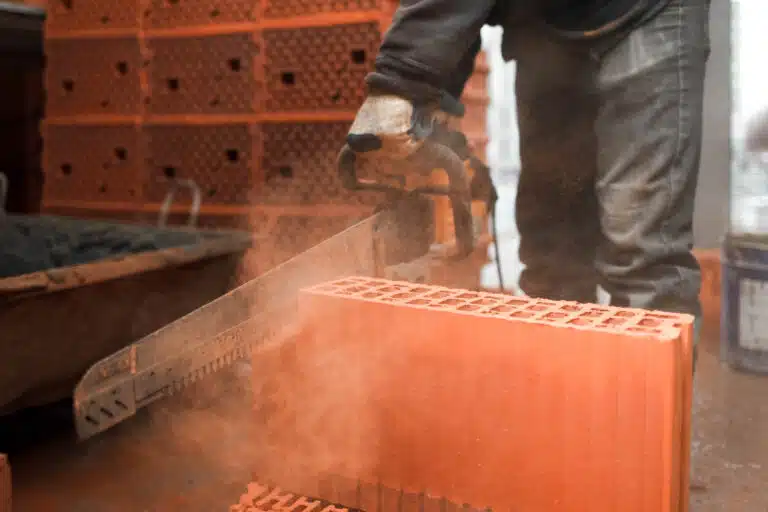
These processes elevate the potential risk of Respirable Crystalline Silica (RCS) exposure to people operating within the hangars where the equipment is being stored, moved and worked on throughout the day.
The challenge was to determine the level of risk, if any, to individuals working with the groundwork’s equipment throughout the day, as well as the risk to anyone visiting the hangars. Balfour Beatty also wanted to increase awareness of the dangers of RCS and protect the workforce from hazardous airborne particulates.
As highlighted by the HSE, elevated levels of RCS are extremely harmful from an occupational health viewpoint, making it particularly important to understand the risks in the working environment and to individual health.
The AIR XS Plan
Sunbelt Rentals recorded the RCS levels over a three-week period from 13 – 29 March 2023, identifying and monitoring exposure to workers within the hangars. This solution was supplemented with additional personal dust monitors to ensure a comprehensive data set was collected.
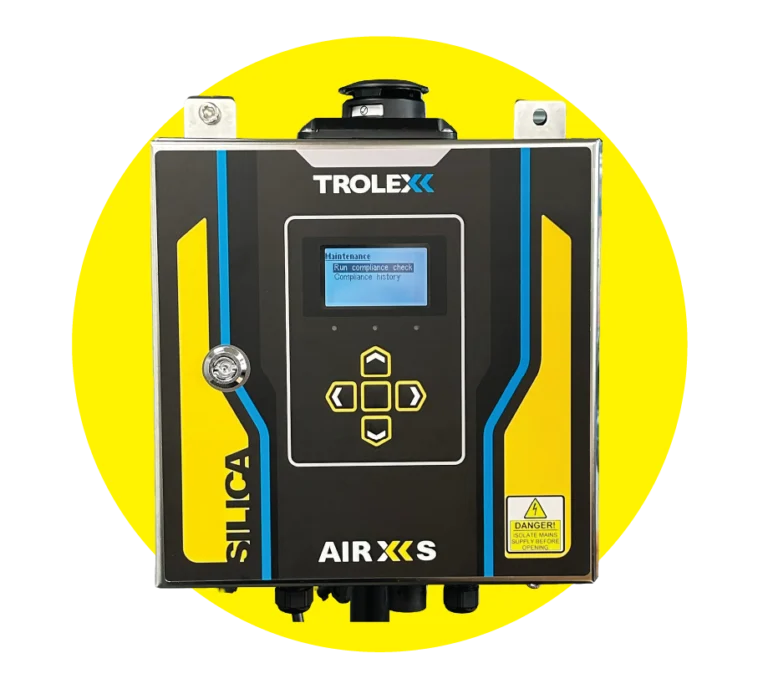
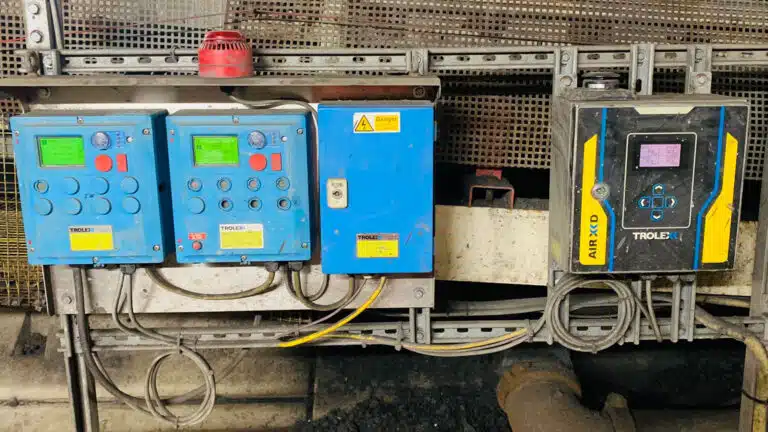
The Trolex AIR XS uses light refraction properties unique to RCS to determine size, shape and quantity of particulates in real-time and provide a live on-screen value for airborne silica. Key features of the Trolex AIR XS include:
- On-device display of RCS measurement in mg/m³ or total particles counted per litre of air sampled. Rolling averaging periods based on 15-minute, 1, 4, 8 and 12-hour patterns.
- On device warnings and alarms based on custom trigger thresholds.
- Reports are easily accessible through the bespoke software allowing the team to take decisive action to keep people safe.
The AIR XS Solution
The data collected by the Trolex AIR XS over the three-week trial, showed that exposure to RCS was high throughout the working day due to local activity. With the average exposure level at 0.3 mg/m³, this was three times the recommended level of 0.1 mg/m³ recorded from the HSE. The personal dust monitors also recorded higher than recommended levels, although this was not for prolonged periods of time.
Whilst it is a site requirement that all workers wear and use the correct RPE, the trial also monitored exposure to visitors outside of the direct operational areas, where there are not the same RPE requirements.
Analysis of the data gathered from the AIR XS during the trial clearly shows that there is a significant risk of RCS exposure in the work areas, and adjoining areas of the hangars, with the personal dust monitor also supporting these findings. RCS levels remained above the 0.1mg limit for much of every 24- hour period, with not one period average falling below the limit over the monitoring period.
Overall, the trial was successful in alerting the site to the risk that RCS presents within the hangars, and equipped Balfour Beatty with the data and knowledge that enabled them to implement a number of effective preventative strategies, providing a safer working environment for individuals on site.