HOW AIR XD WAS USED IN PIGMENT MANUFACTURING
OVERVIEW
Application
Pigment Manufacturing
Industry
Manufacturing
Country
UK
Product(s) used
TX8005 AIR XD
Challenge
In pigment manufacturing, health monitoring is typically done via periodic personal sampling, where workers wear pumps and filters for an 8-hour shift. Lab analysis measures total dust and elements like cadmium, ensuring compliance with exposure limits. However, it cannot identify exposure sources, limiting process improvements and delaying detection of production leaks.
Outcome
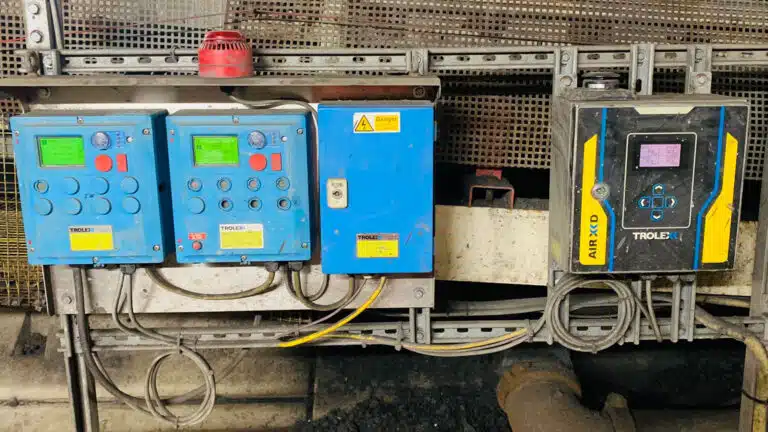
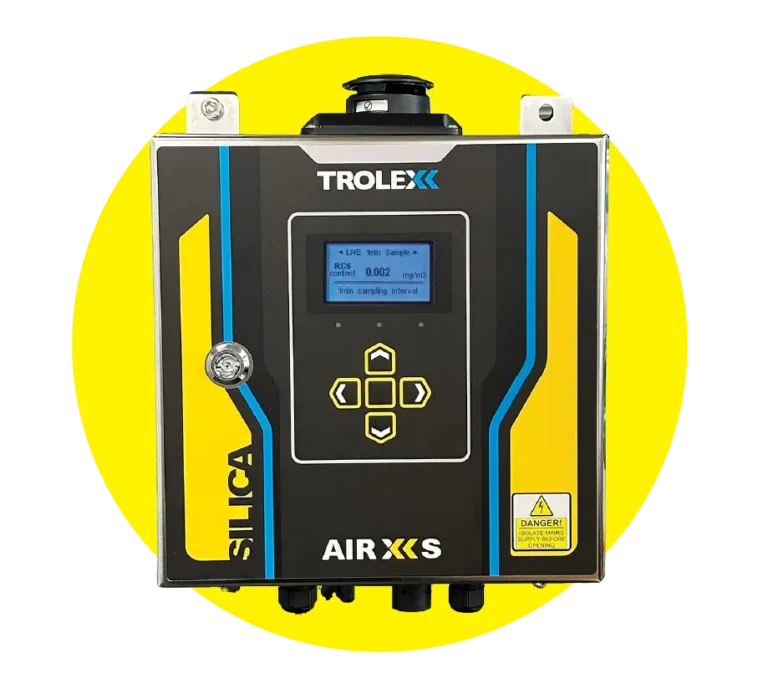
AIR XD was deployed on a mobile tripod to monitor airborne dust and detect process leaks across the plant. It identified elevated particulate levels from pigment manufacturing, which were effectively removed by extraction systems. This confirmed proper control performance and helped highlight key sources contributing to airborne particulate for review.
Company & Application
The pigment industry faces challenges of maintaining product yield whilst also maintaining high standards in workplace safety. Many of the substances used in the pigment industry are subject to low workplace exposure limits (WEL) making reliable and repeatable control of the manufacturing process somewhat difficult.
Profitability of the business is also dependent on optimisation of process efficiency. Whilst Cadmium pigment is one of the most controlled products under REACH legislation, the current a long-term exposure limit is just 25 µg/m3 as an eight-hour time weighted average (TWA), higher than other TWA’s of similar products.
The Challenge
For many companies, occupational health monitoring takes the form of personal monitoring carried out every 6 or 12 months. Workers wear a personal device containing a pump connected to a filter to collect the particulate matter they would be exposed to during a typical 8-hour shift.
This is then taken to a lab to analyse the total dust exposure along with composition analysis which is generally performed to give indications of exposure to individual elements such as cadmium. This is a good way of ensuring the exposure does not exceed current limits but cannot give information about the source of the exposure.
The lack of information prevents the problem from being fixed in the future and doesn’t allow process improvement. One of the controls used to limit worker exposure at many sites is to limit the amount of time workers spend in the production environment, using remote process control but means process leaks aren’t noticed in an efficient manner.
The AIR XD plan
Cadmium pigment manufacture involves several process steps whereby the constituent chemicals are mixed, converted to a precipitate, filtered and the resulting press cake calcined at high temperature to produce a stable pigment powder. This powder is then milled and packaged by weight for sale to manufacturers of plastics, glass, etc.
AIR XD was used in a mobile configuration mounted on a tripod, enabling AIR XD to be moved around the production plant to monitor the active process. The aim of the deployment was to monitor the levels of airborne dust as well as monitoring for process leaks and variation.
The AIR XD solution
AIR XD picked up that the pigment manufacturing process led to raised levels of airborne particulate, but these were quickly cleared by the extraction system in the room.
This is typical of a process and extraction system that are working correctly to limit potential worker exposure. This information can be used to identify the biggest contributors to airborne particulate from the process allowing these to be reviewed.
AIR XD can be used to quickly identify any deviation from normal operation in real time. A large amount of dust was released into the air which could not be quickly removed by the extraction system. The AIR XD alarm was triggered, notifying the process controller so that the system could be shut down minimising the amount of product lost.
The 5-minute average was used for the alarm trigger to prevent the alarm from being triggered by instantaneous spikes generated when products are added to the process. Only sustained raised levels of airborne particulate triggered the alarm.
What it meant moving forward?
- AIR XD allows companies to quickly identify the biggest contributors to measured personal exposure:
This has been used to make process changes with a view to reducing exposure for future tighter WELs.
- Increased yield:
Allows optimisation of the production process to minimise process leaks and other losses of product.